
Renovating a chair is much more than a simple restoration project: it is a way to preserve a piece of furniture, discover a manual craft, and create a unique piece for one’s interior. At Les Chênes Verts, Véronique offers workshops around upholstery to share her passion for seat renovation and accompany participants in their projects.
Through this workshop in the Luberon, everyone can discover the different stages of restoring a chair, from analyzing the piece of furniture to the finishing touches. Véronique shares her advice, techniques, and experience to help participants better understand the upholsterer’s work and the gestures necessary for restoring a seat.
Whether you wish to learn how to restore an antique chair, take up a new creative hobby, or simply discover an artisanal craft, these courses offer an experience based on exchange, practice, and the pleasure of work done by hand.
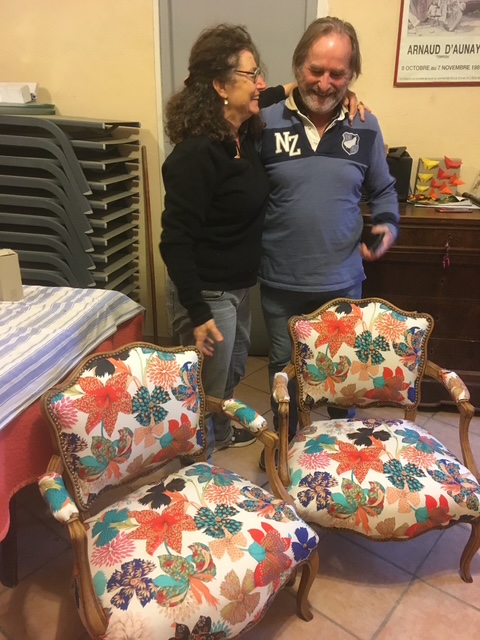
During a workshop, Véronique accompanies participants in discovering the different stages necessary to renovate a chair. The workshop allows one to observe the seat, understand its construction, and identify the necessary interventions before beginning the work.
Depending on the model chosen, the renovation may concern several elements such as the structure, the padding, the seat, or the outer covering. Each chair has its particularities and requires an adapted approach in order to respect its style and history.
Thanks to Véronique’s advice, participants progressively discover upholstery techniques and learn to work with precision on their own creation.
The upholstery courses offered by Véronique are for people wishing to discover this world, whatever their starting level. An introduction allows one to understand the basics of the craft, while participants who already have experience can deepen certain renovation techniques.
The accompaniment is done progressively so that everyone can advance at their own pace. Beginners discover the first gestures, the use of tools, and the different stages of a restoration, while the more experienced can work on more complex projects.
This personalized approach makes upholstery an accessible activity, blending learning, creativity, and the pleasure of carrying out manual work.
Renovating an antique chair requires patience, precision, and a good understanding of the different stages that make up a seat. Through her workshops, Véronique accompanies participants in discovering restoration techniques to help them better understand the work necessary to restore a piece of furniture.
Each chair has its history, structure, and particularities. Before beginning the work, it is essential to observe its general condition in order to identify the elements to preserve, the parts to restore, and the interventions necessary to give it new life.
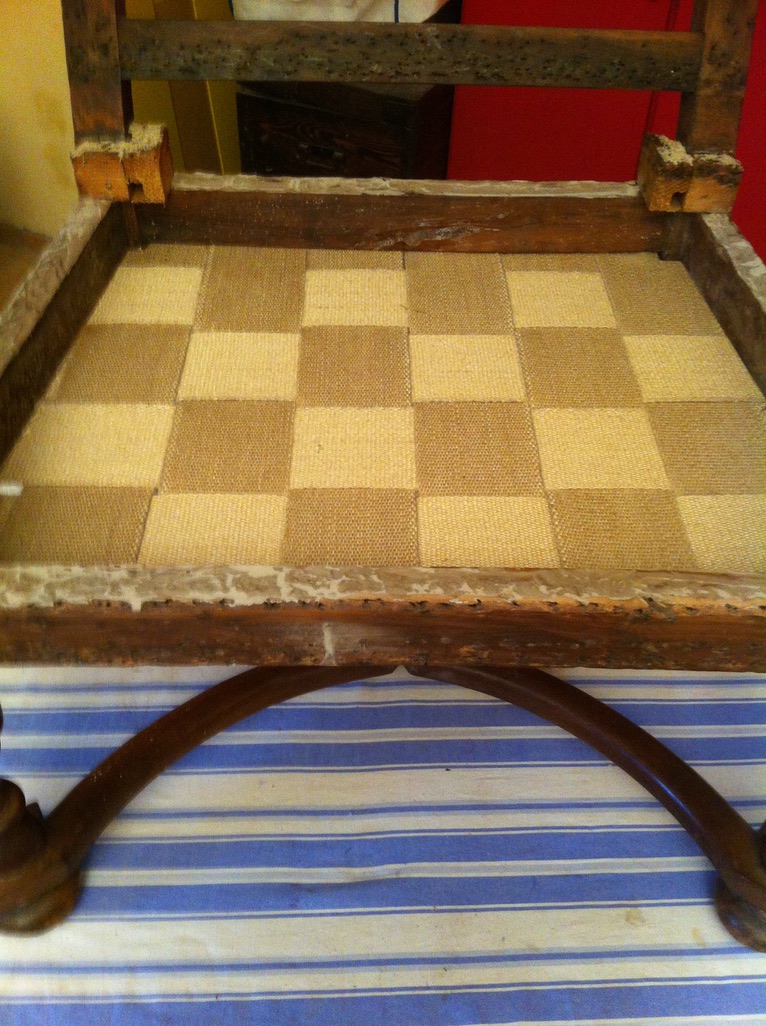
Before any intervention, Véronique teaches participants to observe the structure of the chair in order to understand its design. The condition of the frame, the joints, the springs, or the old padding makes it possible to determine the different renovation stages to plan.
This analysis phase is essential to respect the identity of the seat and adapt the techniques used to the model being worked on. Some chairs require only aesthetic restoration while others require more extensive work on their structure or padding.
This discovery also allows one to better understand the upholsterer’s role in the conservation of antique furniture and the importance of diagnosis before beginning the restoration.
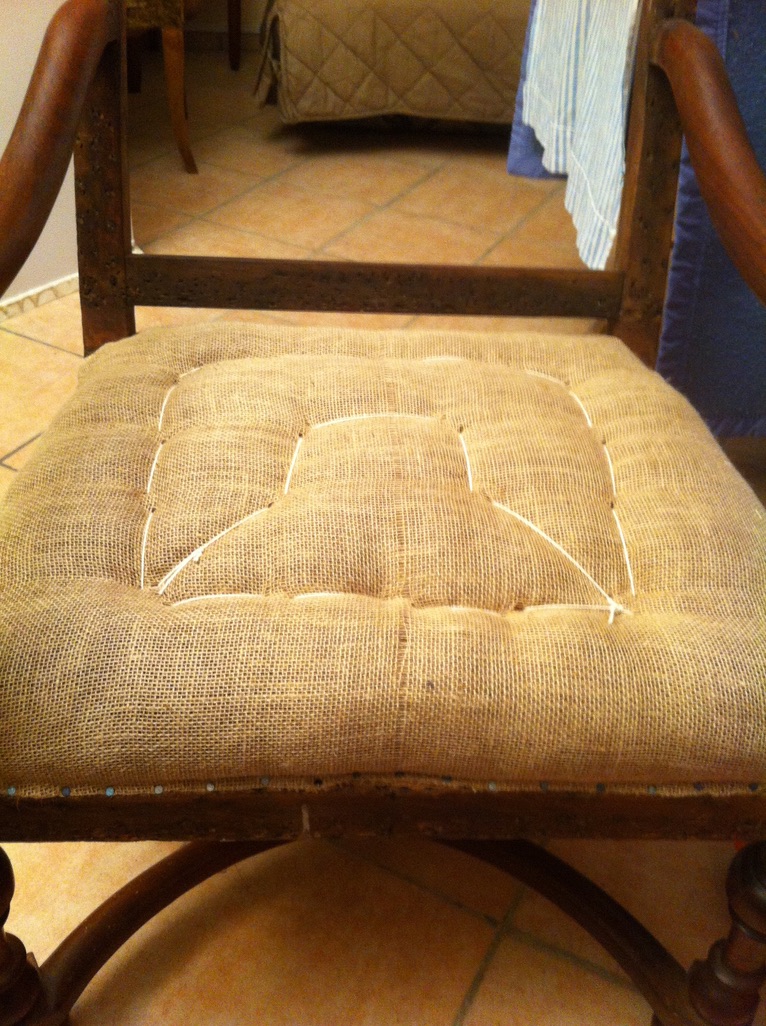
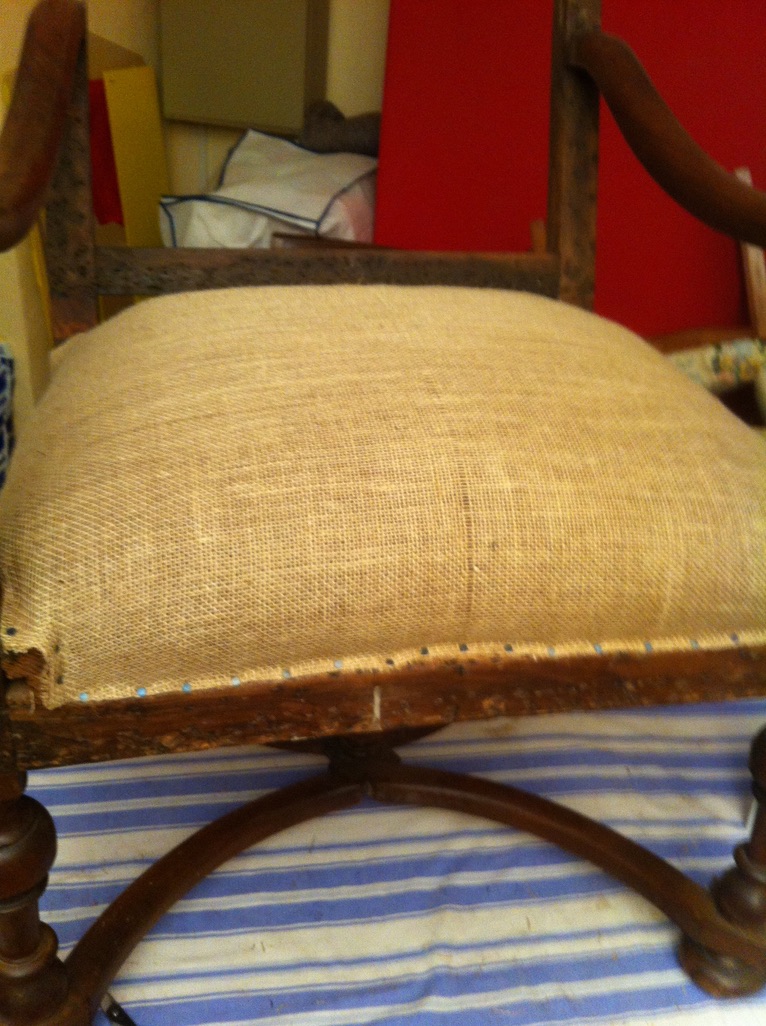
Renovating the seat represents an essential stage in the restoration work of a chair. It consists of progressively rebuilding the different layers that make up the seat in order to restore suitable comfort while respecting upholstery methods.
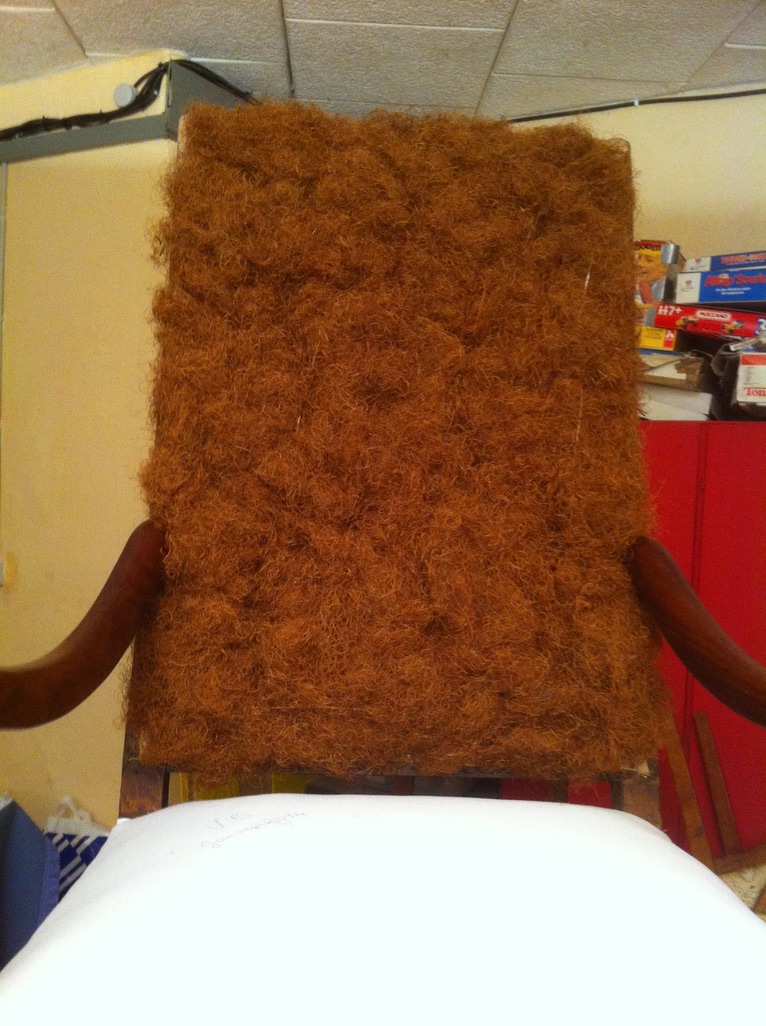
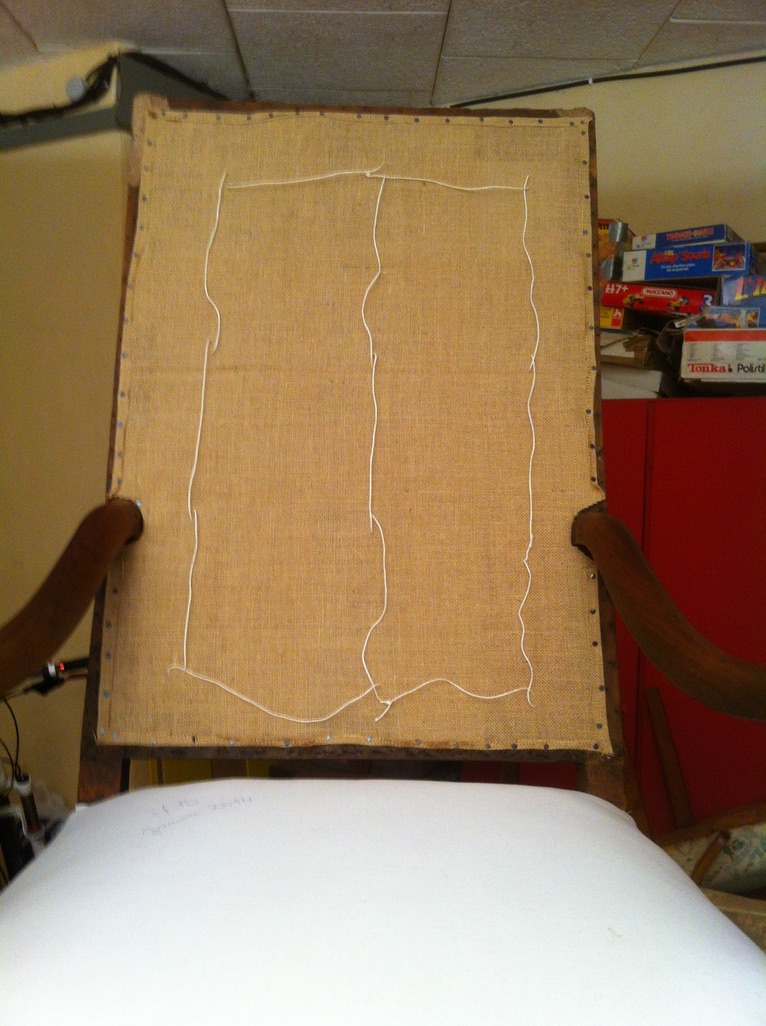
During the workshops, Véronique shares the gestures that allow one to understand the placement of the different elements necessary for the restoration. Depending on the model being worked on, this may concern the webbing, the padding, the horsehair, the wadding, or the materials used to prepare the support before laying the fabric.
This approach allows participants to discover a traditional method based on precision of gesture and respect for artisanal work.
Restoring a chair does not only consist of modifying its appearance. It is also a way to preserve an existing piece of furniture and enhance its unique character through work carried out with care.
The choice of a new fabric, a suitable finish, or a different style makes it possible to transform an old seat to integrate it into a current interior decoration. Each creation then becomes a personalized piece, between heritage and contemporary creation.
With Véronique, participants discover how upholstery makes it possible to preserve antique furniture while offering them new use in daily life.
Upholstery is based on a set of techniques that require precision and know-how. During the workshops, Véronique shares the different stages necessary for renovating a seat so that participants can understand the upholsterer’s work and the methods used in a workshop.
Beyond the technical aspect, these workshops allow one to discover a true art craft, based on manual work, patience, and the search for a harmonious result.
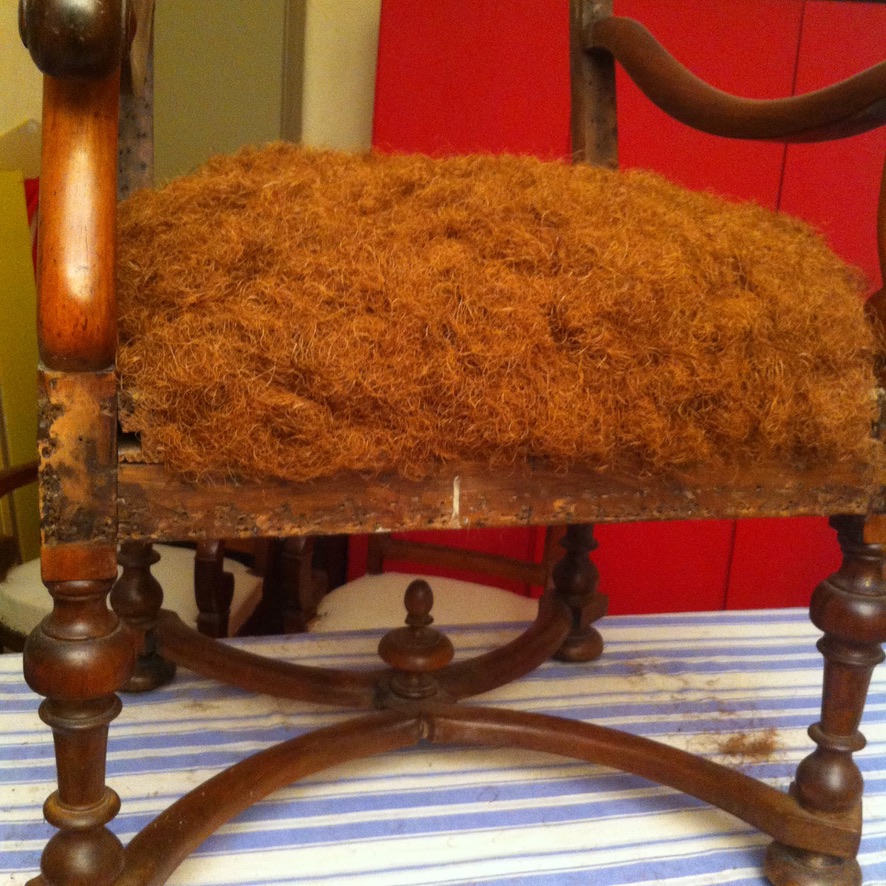
The work of the upholsterer consists of working on the different parts that make up a seat in order to restore its comfort and aesthetics. Véronique accompanies participants in discovering the essential gestures related to padding, covering, and finishing.
Each stage requires precision: preparing the support, working the volumes, adjusting the materials, and ensuring a regular laying of the covering. These gestures allow one to understand all the know-how necessary to carry out a quality renovation.
Learning is done directly through practice, with an approach adapted to each participant’s project.
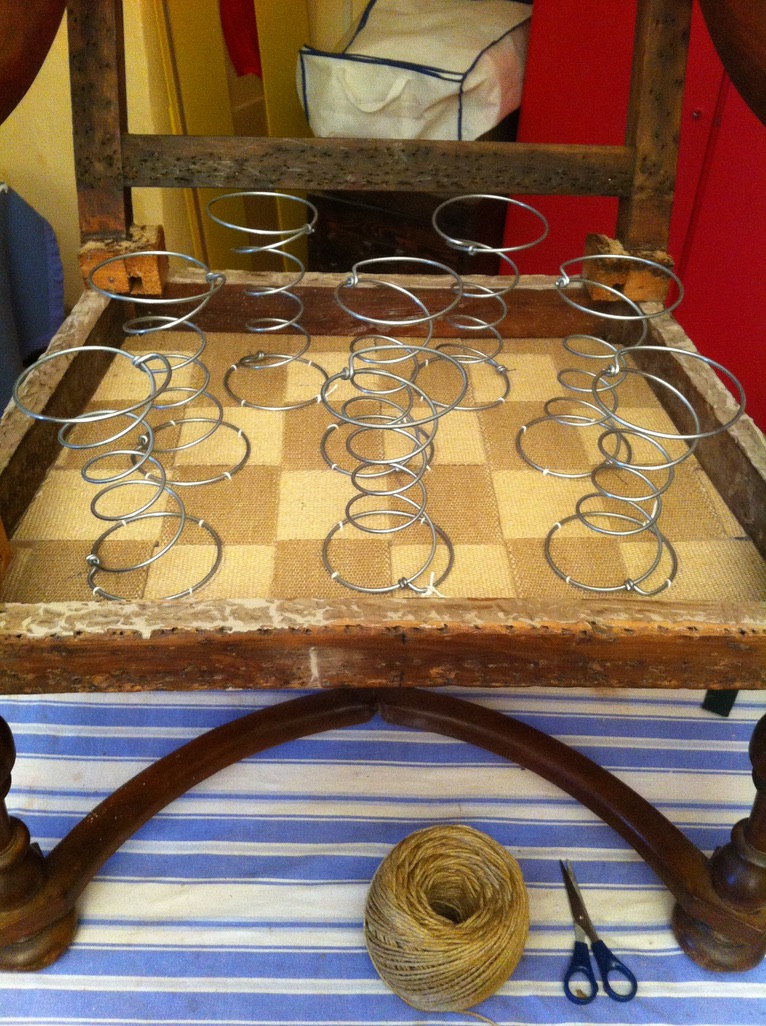
Traditional upholstery techniques make it possible to restore chairs while respecting their original design. They are based on meticulous work where each element finds its place in the construction of the seat.
During the workshops, Véronique explains the value of these methods and their role in furniture restoration. Participants progressively discover the different stages that make it possible to move from an old chair to a renovated creation.
This approach highlights an artisanal know-how that continues today to be transmitted through upholstery workshops.
The choice of fabric represents an important stage in the renovation of a chair. Beyond the aesthetic aspect, the covering must be adapted to the use of the seat, its style, and the desired result. This selection makes it possible to give a new identity to the piece of furniture while maintaining the balance between comfort and decoration.
During the workshops, Véronique accompanies participants in this reflection around materials, colors, and patterns. The choice of textile fully participates in the transformation of the chair and makes it possible to create a creation that corresponds to everyone’s wishes.
Depending on the model being worked on, laying the fabric then requires precision and care in order to obtain a harmonious result. This final stage highlights all the work carried out from the preparation of the seat to the finishing touches.
The renovation of a chair is based on the use of different materials that make it possible to restore a comfortable seat and an aesthetic result. Each element has a precise function in the construction of the seat and contributes to the quality of the final creation.
Through her workshops, Véronique presents the different components used in upholstery and explains their role in the restoration stages. This discovery allows participants to better understand the work carried out behind each renovated chair.
The choice of an upholstery fabric is an essential stage to finalize the renovation of a chair. The material selected must correspond to the style of the piece of furniture, its use, and the desired atmosphere in the interior.
During a workshop, participants can discover the different possibilities offered by textiles and understand the importance of the quality of the covering in the final creation. The fabric brings the decorative touch that reveals the character of the restored chair.
Combined with the padding work and the different finishes, it makes it possible to transform an old seat into a unique piece adapted to its new environment.
Behind the final appearance of a chair are several elements essential to its structure and comfort. Webbing, padding, horsehair, foam, or wadding may be used depending on the method chosen and the condition of the seat to be restored.
Véronique presents to participants the role of these different components so that they understand how a chair is constructed and how each element contributes to the result obtained. This approach makes it possible to better grasp the different stages of a restoration carried out according to the rules of the art.
Knowledge of materials is an integral part of learning upholstery and makes it possible to work with greater precision on each creation.
The chair renovation workshops offered by Véronique are part of an experience around creation, sharing, and the discovery of an artisanal craft. Within the setting of Les Chênes Verts, this activity allows participants to take the time to learn and carry out accompanied manual work.
Before participating in a workshop, several practical pieces of information make it possible to prepare one’s project: the course of the workshop, organization of the days, necessary equipment, and registration procedures.
The upholstery workshops take place in the setting of Les Chênes Verts, in the heart of the Luberon. This setting offers a context conducive to discovering an artisanal activity, far from the daily rhythm, in a friendly atmosphere.
Participants can thus combine learning upholstery with discovering the territory. The location of the workshop makes it possible to enjoy a pleasant environment while devoting time to a furniture renovation project.
Each workshop day is organized around discovery and practice. Véronique accompanies participants in the different stages of their project, providing her advice and explaining the techniques adapted to the chair being worked on.
The course may vary depending on the progress of the creation and the seat model concerned. The time devoted to explanations alternates with the phases of manual work so that everyone can progress at their own pace.
Before participating in an upholstery workshop, it is essential to know the practical information related to the organization of the workshops. The registration procedures, availability, or the functioning of the courses allow each person to prepare their renovation project in good conditions.
Véronique remains available to exchange with participants and answer the different questions concerning the workshop. This preliminary exchange makes it possible to better understand expectations, present the chair or seat concerned, and best prepare the experience around upholstery.
To participate in a workshop, making contact with Véronique makes it possible to know the next possibilities and exchange around the desired project. This step is an opportunity to present one’s wishes, one’s level of practice, and the type of chair or piece of furniture on which to work.
Registration can thus be prepared according to the needs of each participant. The information transmitted in advance makes it possible to better organize the workshop and offer adapted accompaniment throughout the creation.
Whether for a first discovery of upholstery or to deepen certain techniques, this exchange makes it possible to prepare an experience consistent with everyone’s expectations.
A stay in the Luberon can also be an opportunity to discover activities related to artisanal crafts. Through the workshops offered by Véronique, visitors can devote time to a manual practice around chair renovation and furniture work.
This activity brings a different dimension to a stay: it makes it possible to slow down, learn new techniques, and discover a world where precision of gesture occupies an important place.
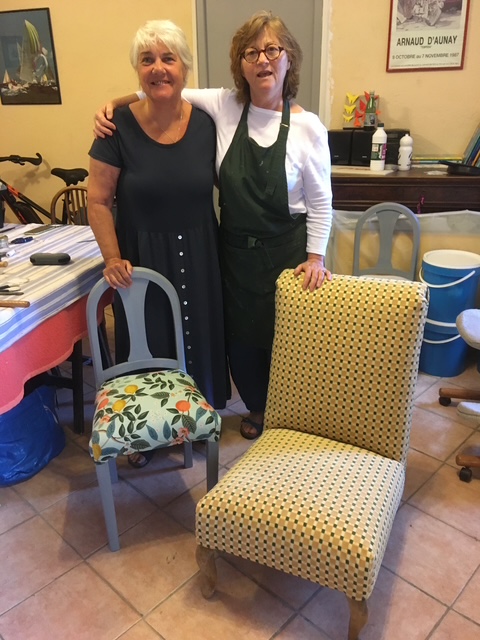
Upholstery is a craft that combines technique, creativity, and patience. Participating in a workshop makes it possible to discover the different stages necessary to transform a chair and understand the work carried out behind each renovated piece.
With Véronique, this discovery is based on transmission and exchange. Participants can learn to better know the materials, the working methods, and the gestures that make it possible to restore a seat.
Beyond the renovation of a piece of furniture, this activity offers a true discovery of an artisanal craft and the importance of manual work.
Between heritage, landscapes, and local crafts, the Luberon offers a setting conducive to experiences that go beyond classic activities. An upholstery workshop makes it possible to add a creative dimension to a stay by discovering a practice related to craftsmanship.
This activity may interest people wishing to take advantage of their time in the region to learn, create, and leave with new knowledge around furniture restoration.
In the world of Les Chênes Verts, the discovery of the territory is thus accompanied by a more personal approach, focused on sharing and transmission.
Find the main information to prepare your renovation project with Véronique.
No, it is not necessary to have already practiced upholstery to discover this activity. The workshops precisely make it possible to progressively learn the different techniques used to renovate a chair and understand the basics of restoration work.
The discovery is done step by step, taking the time to understand the role of the different tools, materials, and gestures necessary for restoring a seat. Beginners can thus familiarize themselves with this world before deepening certain methods.
Beyond the technical aspect, these workshops are also for people wishing to discover an artisanal craft, develop a manual activity, or simply enjoy a creative moment around furniture.
The possibility of working on one’s own chair depends on the organization of the workshops and the project envisaged. Before participating, it is advisable to exchange with Véronique in order to present the model of the seat, its general condition, and the desired work.
Each chair has its particularities. An antique chair, a dining chair, or another piece of furniture may require different interventions depending on their structure, padding, or style.
This exchange makes it possible to determine whether the project corresponds to the functioning of the workshop and to prepare the different renovation stages in good conditions.
The time necessary to restore a chair depends on several elements: its initial condition, the work to be carried out, the techniques used, and the level of finish sought.
A complete renovation may require several stages, particularly when the seat requires work on the structure, padding, or covering. The time devoted to the work makes it possible to respect each phase and obtain a harmonious result.
During a workshop, the objective is above all to discover the different stages and understand the working method used to renovate a piece of furniture according to the rules of the art.
The renovation of a chair requires different tools that make it possible to work with precision on each stage of the project. These tools accompany the upholsterer’s work during the preparation of the seat, the laying of materials, and the finishing.
Depending on the creations, they may be used when removing the old covering, placing the padding, or working the fabric.
The discovery of these tools allows participants to better understand the demands of the craft and the importance of manual gesture in the creation of a renovated chair.
The materials used in upholstery vary depending on the model of the chair and the restoration method chosen. They may concern the structure of the seat, its comfort, or its final covering.
During a workshop, the discovery of materials makes it possible to better understand the role of each element in the construction of a chair. The fabric, the padding, or certain support elements all contribute to the final result of the renovation.
This approach helps participants better appreciate the work necessary behind each restored piece of furniture.
A change of decoration mainly consists of modifying the exterior appearance of a seat, for example with a new fabric. Renovation goes further since it may concern different elements of the chair such as its structure, comfort, or padding.
The restoration of a seat requires a more complete analysis of the piece of furniture in order to preserve its quality and functioning. It thus combines the decorative aspect with true restoration work.
It is this comprehensive approach that makes upholstery a true artisanal craft.
Yes, upholstery can be discovered as a creative activity blending learning and the pleasure of manual work. It makes it possible to take the time to carry out a concrete project while developing new skills.
Renovating a chair also offers the satisfaction of transforming an existing piece of furniture and participating in its new history. This activity may interest people attracted to decoration, craftsmanship, or creations made by hand.
An upholstery workshop makes it possible to better understand the daily life of an upholstery decorator and the different stages necessary to restore a seat. It offers a first approach to the profession through the discovery of techniques, materials, and artisanal work.
This experience makes it possible to measure the precision necessary to carry out a quality renovation and discover a world where every detail counts.